“Get Free”

The final song on this soundtrack, “Get Free”, from Lana’s fifth album, Lust for Life, is in direct reference in to the final line of the play. Linda’s line, “We’re free.” has many interpretations, and thus, I chose this song to represent my own. The song itself also closes the album by referencing “Lust for Life”, and may be inspired by Neil Young’s “Hey, Hey, My My (Into the Black), which has an alternative title “Hey, Hey, My My (Out of the Blue). The final chorus of the song would be played during Linda’s final monologue, lightly, but increasing in volume as the play moves towards its conclusion. “Sometimes it feels like I’ve got a war in my mind. I want to get off, but I keep ridin’ the ride. I never really noticed that I had to decide, To play someone’s game or live my own life. And now I do. I wanna move, Out of the black (out of the black) Into the blue (into the blue) {x3}” This song also represents Linda’s choice to continue living on, even after losing her husband through his death, and her children as they move out from the house. In both the song and the play, freedom is the ultimate goal, but it is also realized that freedom and change come from within and to be free, you must decide to better yourself. Lana also makes references to that fact that she removed songs like “Yosemite” from this album because they were “too happy” and she just wasn’t there yet. This mirrors Linda, as throughout the play, she wasn’t quite free until she chose to be.
Image result for lana get free

“Summertime Sadness”

The last song from Lana’s Born to Die album on this soundtrack, also perhaps her most infamous, “Summertime Sadness” is one of, in my humble opinion, the greatest songs of all time. The song itself is a reflection upon a time of which Lana danced, cruised, and felt alive with someone she truly loved; someone who she lost and will love and remember forever. It’s also a song that encourages moving on in a respectful and powerful way. This song has been selected for both the section involving multiple song pieces, and the beginning of the Requiem. During the sequence for Willy’s death, the following lines would play, “Nothin’ scares me anymore” and “ I got that summertime, summertime sadness”. These lines would be used to symbolize Willy’s final decision to commit suicide, and would pair nicely with the other lines playing as he walks out the door. One final line would be played as Willy gets into his car, “Even if you’re gone, I’m gonna drive, drive, drive”. Of course, this is in reference to him driving, which Willy’s introduction and exit are based on, as well as his desire to chase after what he wanted, even into death. In the Requiem, the chorus would play as a representation of all of the characters’ mourning. “Kiss me hard before you go. Summertime sadness. I just wanted you to know; That, baby, you’re the best.” This song also provides a conclusion to Willy’s character as a whole, and paired with its iconic instrumentals, helps the play transition to its end.

Image result for summertime sadness video

“Body Electric”

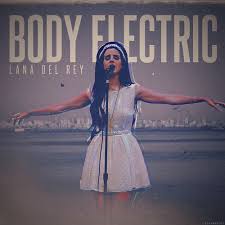
From Lana’s second album, Paradise, is “Body Electric”, a tale of a woman incapable of getting over a major loss by distracting herself from reality. The title is a reference to a poem, “I Sing the Body Electric” by Walt Whitman that places the sensuality of people in the physical world. This would immediately start playing as soon as Ben is offstage, preparing the audience for Willy’s death. The second verse covers multiple themes of the play in a few mere seconds, which allows for Act 2 to end on a high note. “Whitman is my daddy, Monaco’s my mother, Diamonds are my bestest friend. Heaven is my baby, suicide’s her father. Opulence is the end.” The first have of the verse covers Willys obsession with becoming rich and successful. Lana’s mother and father, as well as her favorite companion, are symbols of wealth and luxury. The second half is a perfect setup for Willy’s death, addressing death directly, and the cause of his death itself. Much like her song “Young and Beautiful”, created for Baz Luhrman’s 2013 adaptation of The Great Gatsby, “Body Electric” focuses upon the dangers of opulence and the pursuit of wealth. The song would end before Willy exits the house, and afterwards, pieces of multiple aforementioned songs, as well as “Heaven is my baby, suicide’s her father. Opulence is the end.” will play over each other, over dialogue, and over other sounds as Willy gets into his car and drives towards death.

“Dark Paradise”

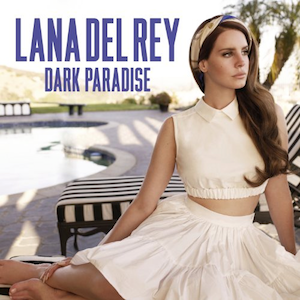
I chose “Dark Paradise”, from Lana’s first album, Born to Die, as a parallel to “God Knows I Tried”during the small sequence before the final scene of Act 2. As the darkest song on the album, “Dark Paradise” easily times into Willy’s goal of suicide in Act 2, as well as his comfort in places other than he actually is. The pre-chorus will began to play as Ben appears, showing Willy’s thoughts during the scene. “And there’s no remedy for memory. Your face is like a melody; It won’t leave my head. Your soul is haunting me, And telling me that everything is fine. But I wish I was dead (Dead, like you)” As Ben has been dead for a long time, his memory has been haunting Willy for just as long, just as Lana’s lover’s memory haunts her. The final line of the pre chorus also connects to Willy’s dream of suicide. A piece of the chorus would also be played as the flashback comes to an end, “Every time I close my eyes. It’s like a dark paradise.” This again would reinforce his wish to die, and would buildup the coming end of the Act, as well as the coming end of his life. The paradise described has two separate meanings. As the paradise is in the dark, it is a corruption of the actual memories, and in the song, Lana knows that even if she is fond of them, she knows that they will only bring her pain. Willy’s flashbacks as a whole are his “dark paradise.”

“God Knows I Tried”

I chose “God Knows I Tired”, from Lana’s fourth album, Honeymoon, to represent Linda’s emotions before Willy’s death, and as a buildup to that scene. This song would be played during the scene that happens before the end of Act 2, where Linda is trying to get Willy back to bed. The scene would slow down significantly as the following chorus plays, in order to focus upon Linda, and there would be a spotlight, perhaps a light blue or teal, placed on her as she starts to go up the stairs. “God knows I lived. God knows I died. God knows I begged. Begged, borrowed, and cried. God knows I loved. God knows I lied. God knows I lost. God gave me life. And God knows I tried. God knows I tried. God knows I tried. God knows I tried.” The final lines of “God knows I tried.” will get softer with each repetition of it, and Linda will pause of the stairs and look down at Willy before continuing up. The title of this song ties into Linda’s final thoughts for that night, and perhaps, act as a realization for her, as she has finally realized that even if she couldn’t keep her family together, that at least she tried. To Lana, the chorus is almost a form of primal rage, as she has been hounded for years over her authenticity and validity, just as Linda’s marriage and her whole reality has throughout the course of the play.


“Born to Die”

From Lana’s first studio album, Born to Die, “Born to Die” is easily one of her most beautiful and overall best songs she has ever produced. Though there is the characteristic melancholy and sadness found in the vast majority of her works, it has a unique blend of cinematic and modern music that aide her storytelling. This song would start to be played after “In My Feelings” ends, as Linda explains that Willy is planting a garden. The following intro would play as the scene begins to transition from indoors to outside: “Why? (hey, man!). Who, me? (alright!).Why? (hey, man!)”. As Lana is questioning the meaning of life during the intro, the questions asked can be representative of Willy’s thoughts about himself and his life, and the responses can be the voices Willy hears in his mind. As Biff and Willy talk, and as Biff is telling his father that he is leaving for good, the following would play: “Don’t make me sad, don’t make me cry. Sometimes love is not enough and the road gets tough, I don’t know why. Keep making me laugh – Let’s go get high. The road is long, we carry on, Try to have fun in the meantime.” As the lyrics tell a story of how Lana was trying to distract her man from the problems in their relationship by trying to have fun, Willy was so disillusioned of what he and his family’s positions and problems actually were because he was so convinced that he could keep an image of the past as a reality. One final line would play as Biff storms off: “‘Cause you and I, we were born to die.” This line relates both to the death of their relationship as it is a revelation of how this was bound to fail, but also the title itself, as both Biff and Willy are just ordinary men, who, like every other man, is born, then he dies.

Related image

“In My Feelings”

From Lana’s fifth studio album, Lust for Life, is “In My Feelings“. I chose this song for one of the most important scenes in the entire play: the argument between the family members. I imagine the entirety of the chorus playing as the family is screaming and shouting at each other, with the music almost playing over them at times. ‘Cause you got me in my feelings. (Got me feeling so much right now). Talkin’ in my sleep again. (I’m makin’ no sense at all). Drown out all our screamin’. (Got me feelin’ so crazy right now). Who’s doper than this bitch? Who’s freer than me? You wanna make the switch? Be my guest, baby. I’m feelin’ all my fuckin’ feelings”. The scene itself is a confluence of many potent emotions and is perhaps the climax of the story. The song expresses many emotions, including lust, anger, sadness, boldness, regret among others, while the scene expresses rage, hatred, misery, etc. The line “‘Cause you got me in my feelings.” would start playing as soon as the argument breaks out, and it would end as Linda calls Biff the “scum of the earth.” This song is primarily intended for Linda, but Happy and Biff are also connectable to it. The line focusing on freedom relates to both to Linda and Biff, as both want to achieve freedom from the current situation that they have gotten trapped in. Linda wants freedom from her children, and Biff wants the freedom to do what makes him happy, as well as freedom from his father’s insanity.

Image result for lana in my feelings

“Music to Watch Boys To”

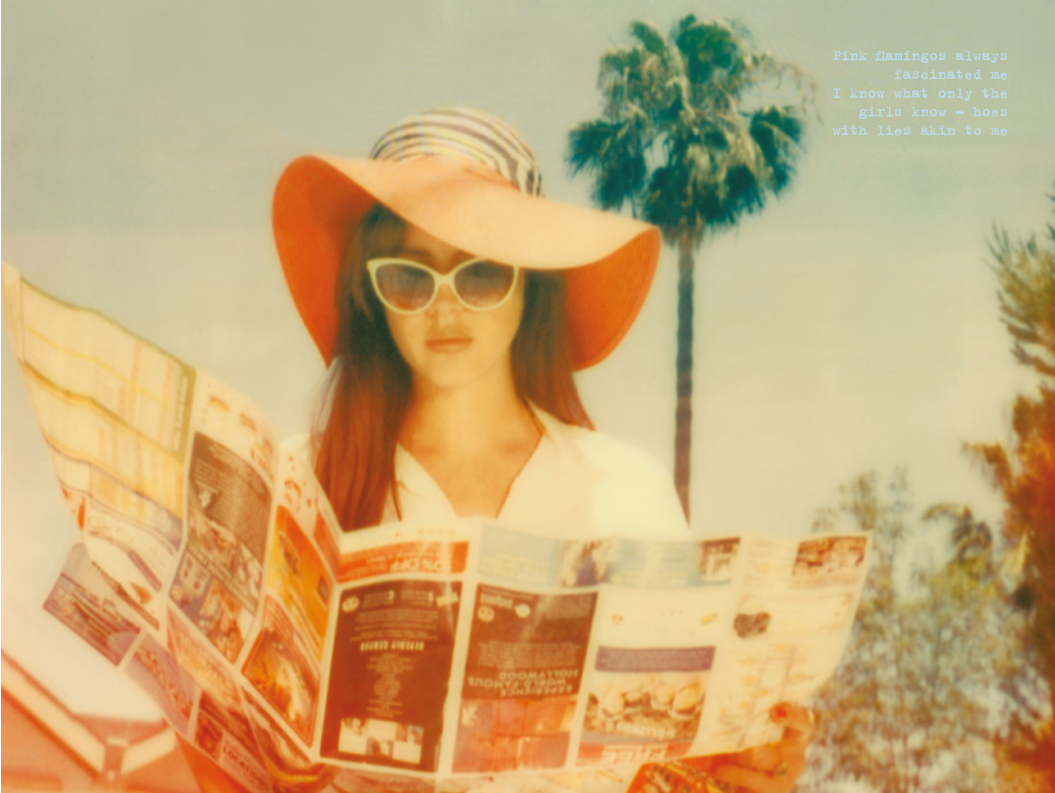
One of my personal favorites from Honeymoon, “Music to Watch Boys To” is absolutely perfect for two scenes in this play. Reminiscent of the Born to Die era, and a nod to “This Is What Makes Us Girls”, the song has a more matured Lana describing her loyalty to a man she knows is going to leave her. The first scene I envision this playing during would be the introduction of Miss Forsythe, who might be a prostitute, based upon Happy’s description of her moral character. As she and Happy begin talking, the following would play, “(I like you a lot)” This would represent Happy’s desires that were introduced in Act 1. Later, as she walks off to meet up with Letta, another line would play, “Hoes with lies akin to me.” This line can be used for both the girls and Happy. The girls, with a strong possibility of them being prostitutes, are the “hoes,” in this case. Happy and the girls are both represented by the “lies” line, as not only does Happy lie about himself and Biff in order to win them over, but the girls lie through their mannerisms and appearance. The second usage of the song would be just before linda’s breakdown in Act 2. The following would play before the boys enter, “And I live to love you, boy. Nothing gold can stay” The first line of that would play as Linda thinks to herself about how she can keep her marriage together, but the second line would play just before the boys enter, almost if she has realized that the best days of her life are behind her. “Nothing gold can stay” first came from Robert Frost’s poem, “Nothing Gold Can Stay”, then the poem itself was used in The Outsiders, and then it was used by Lana. “Nothing gold can stay” would also be played during the previously mentioned car scene.

“Florida Kilos”

Far more playful and light in tone than the rest of her fourth album, Ultraviolence, “Florida Kilos” is a clear fit for one of Willy’s flashbacks in Act 2 of Death of a Salesman. Though the overall message of this work is far different than I would use it for within the scene, both share enough similarities in storytelling that would suite the play perfectly. Obviously, the “kilos” in the title refers to cocaine, and Florida, most prominently in the city of Miami, is a hotspot for trafficking. To Lana, Florida is a faraway place full of risk, but can be very rewarding.  After Howard leaves the room during his meeting with Willy, the following line would play lightly as Ben asks Willy to go to Alaska. “Come on down to Florida, I got something for ‘ya. We could see the kilos or the Keys, baby, oh-yeah” As the whole flashback sequence is about risk and leaving what you already have behind, “Florida Kilos” ties into Willy’s naïveté. Lana, in this work, doesn’t truly understand what she would be getting into, and neither did Willy during this flashback. As Ben begins to walk offstage, another piece of the song would play “People never die in Miami.” This would be a small allusion to Willy’s death at the end of Act 2, and would reinforce Willy’s inability to distinguish the past from the present. “Come on down to Florida” will be played one last time during the multi-song sequence during which Willy gets into his car and commits suicide.

Image result for florida kilos lana del rey

“Pretty When You Cry”

Another track from Ultraviolence, “Pretty When You Cry” is one of her most melancholy tracks and perhaps her most depressing, but it is one of her most beautiful. Carrying the theme of the Ultraviolence era, characterized by its cinematic sound and crestfallen tones. “Because I’m pretty when I cry. I’m pretty when I cry” This line, repeated throughout the song, is easily related to Linda’s character. I envision this song playing in a sequence during which Linda wakes from her bed, much earlier than Willy, and sheds a few tears in the kitchen, alone. It would also foreshadow her later breakdown in Act 2, and would also serve as a small setup for a line later in the play relating to her hair color. I also would have a piece of the song play during the same sequence in which other songs play while Willy gets into his car to commit suicide. “You leave and leave again” would be used to show Linda’s thoughts, but as a way of showing how despondent she has become. This song also suggests that there is a sort of normalization of making someone you love cry, or at least within Lana’s relationship. This ties into Willy’s treatment of Linda throughout the entirety of the play. Also expressed by the song is the belief that sometimes, regardless of how hard one might try to do so, some people are completely unchangeable and certain situations just can’t be fixed.

Image result for pretty when you cry